2022SummerTeam5
Truck Detector
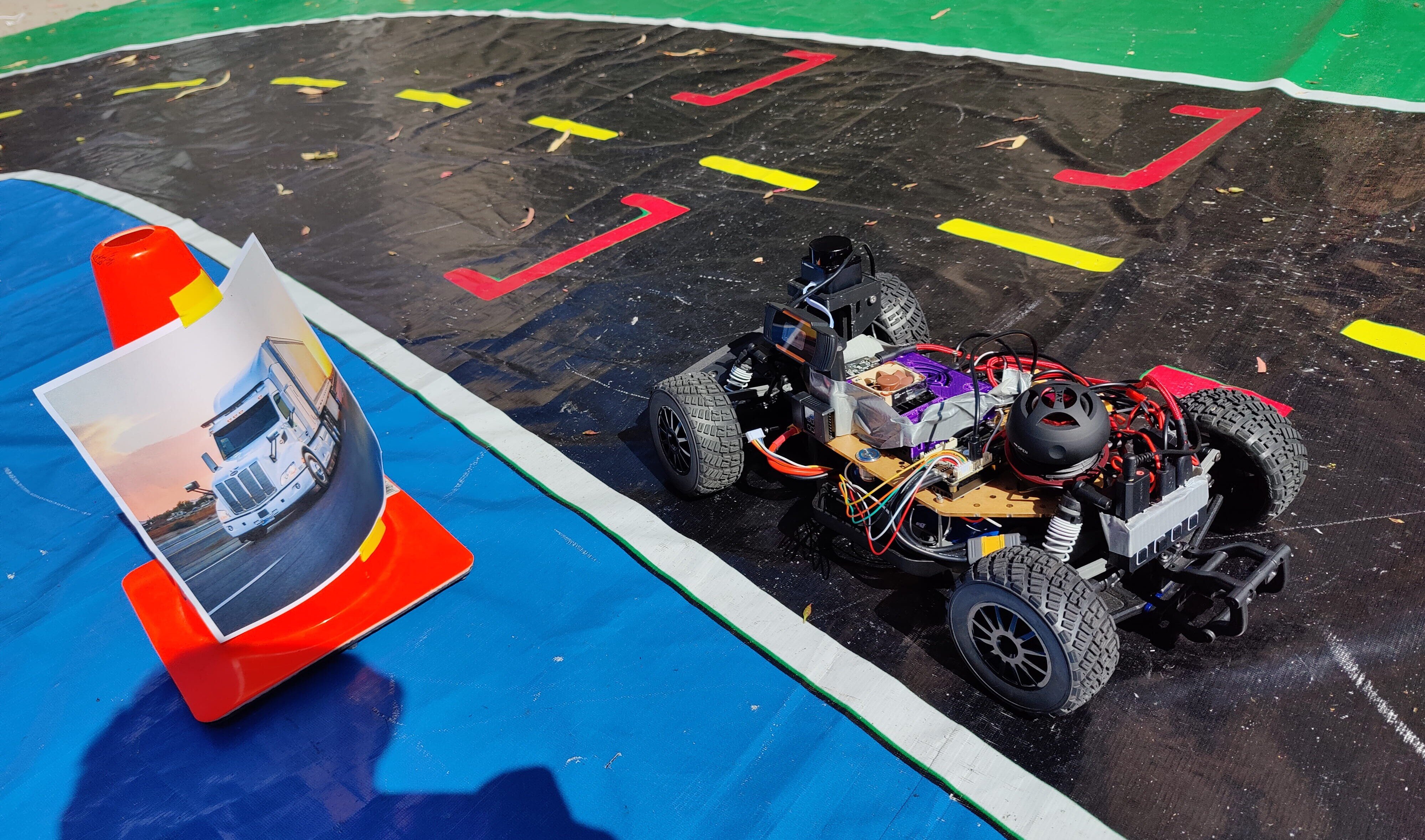
A 1/10 scale autonomous vehicle that can detect images of trucks using OpenCV. Initiates an emergency brake, plays an alarm, and pauses autopilot upon detection.
Autonomous Driving Demo
https://www.youtube.com/watch?v=QbMr3mmj_cc
Team Members

Myat Ei Mon ("Amy") - Mechanical & Aerospace Engineering

Uriel Salazar ("Uri") - Electrical & Computer Engineering
Hongyuan Zhang ("Ray") - Mechanical & Aerospace Engineering

Proposal
Tesla vehicles have had a history of fatal accidents when in autopilot due to being unable to recognize semi-trucks. Semi-trucks bypass the image recognition system in the autopilot system and result in head-on collisions. Motivated by these terrible accidents, our proposed Vehicle Identification & Alarm System will identify images of vehicles along the track by adding a speaker and announcing the vehicle type: "Semi Truck Detected," "Bus Detected," "SUV Detected," "Sedan Detected," etc. The purpose of this project is to utilize ROS2 (Robotic Operating System) and Docker containers to develop software and incorporate them into the hardware of donkey cars such as NVIDIA Jetson Nano, and OAK_D webcam to enable autonomous driving. And we also used YOLO (You Only Look Once) algorithm, a real-time object recognition algorithm, to classify and localize objects in a single frame.
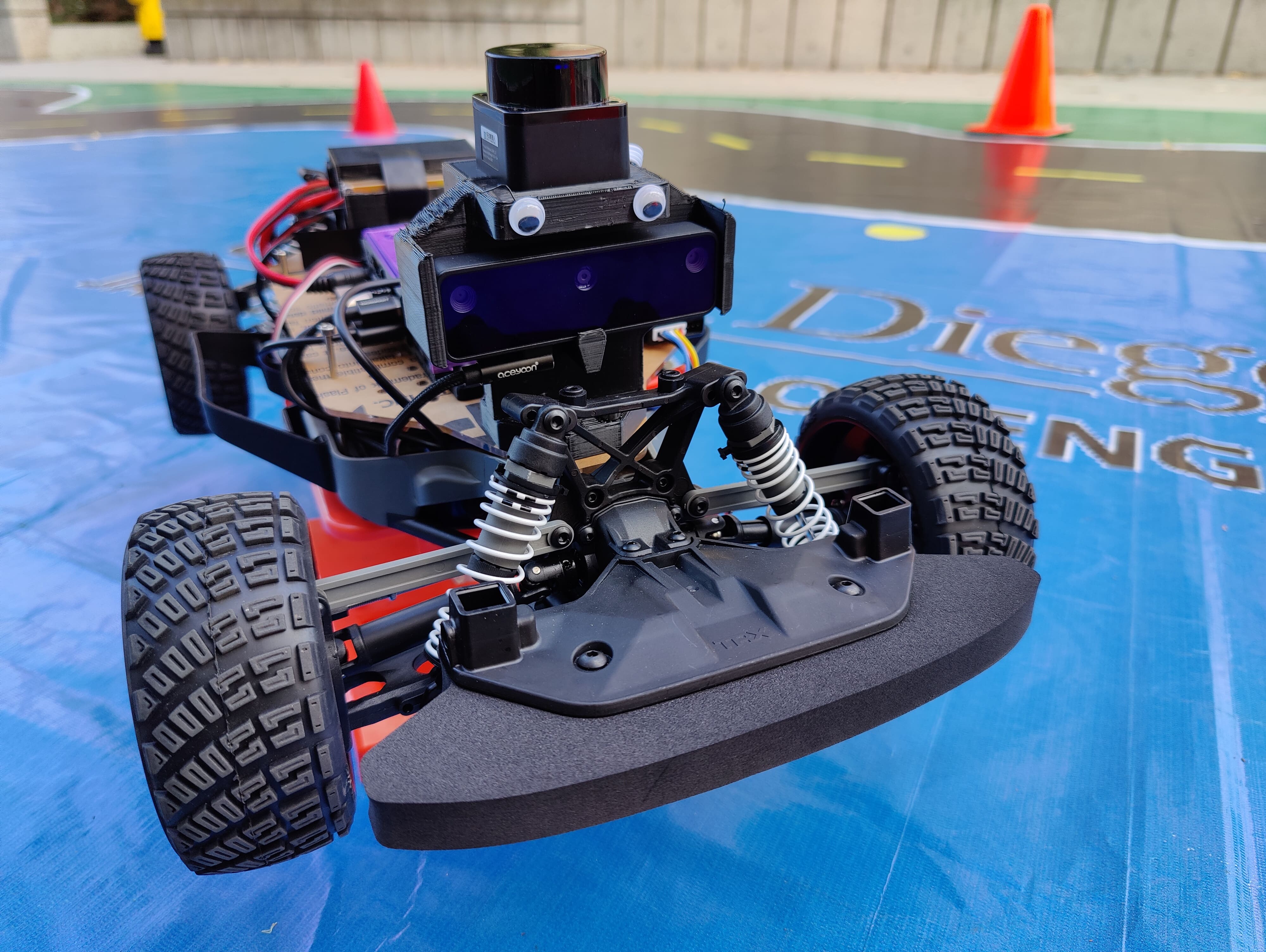
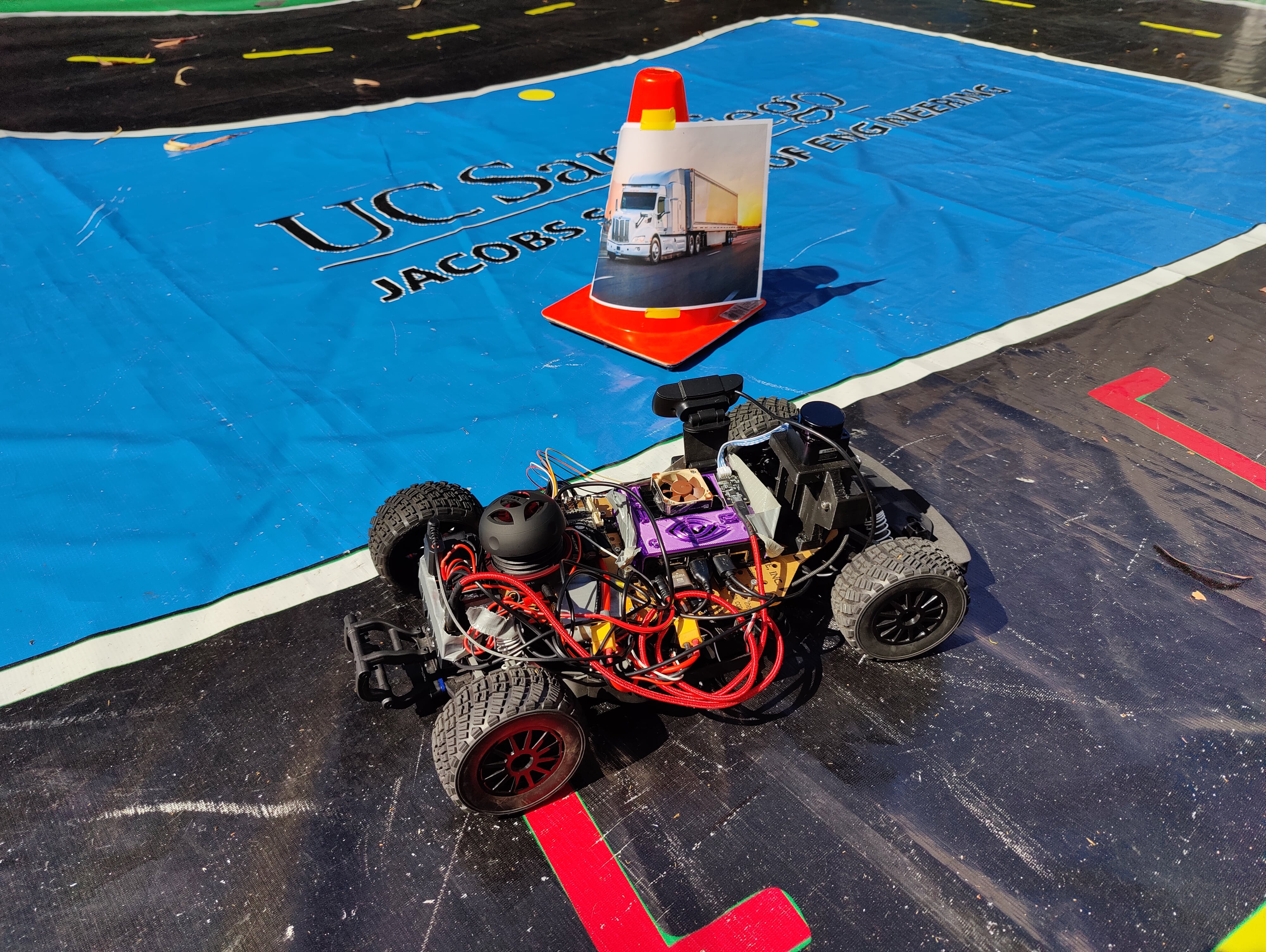
Our car will be able to use computer vision to detect and follow the yellow line on the lane by itself using ROS2, and at the same time, it will also be able to classify the images of vehicles detected along its way. Once it detects the images, the speaker will announce the vehicle type detected. In order to multitask, we used two cameras: one at the front (OAK_D) for lane detection to drive autonomously, and one on the side (webcam) for OpenCV image processing to classify vehicle images.
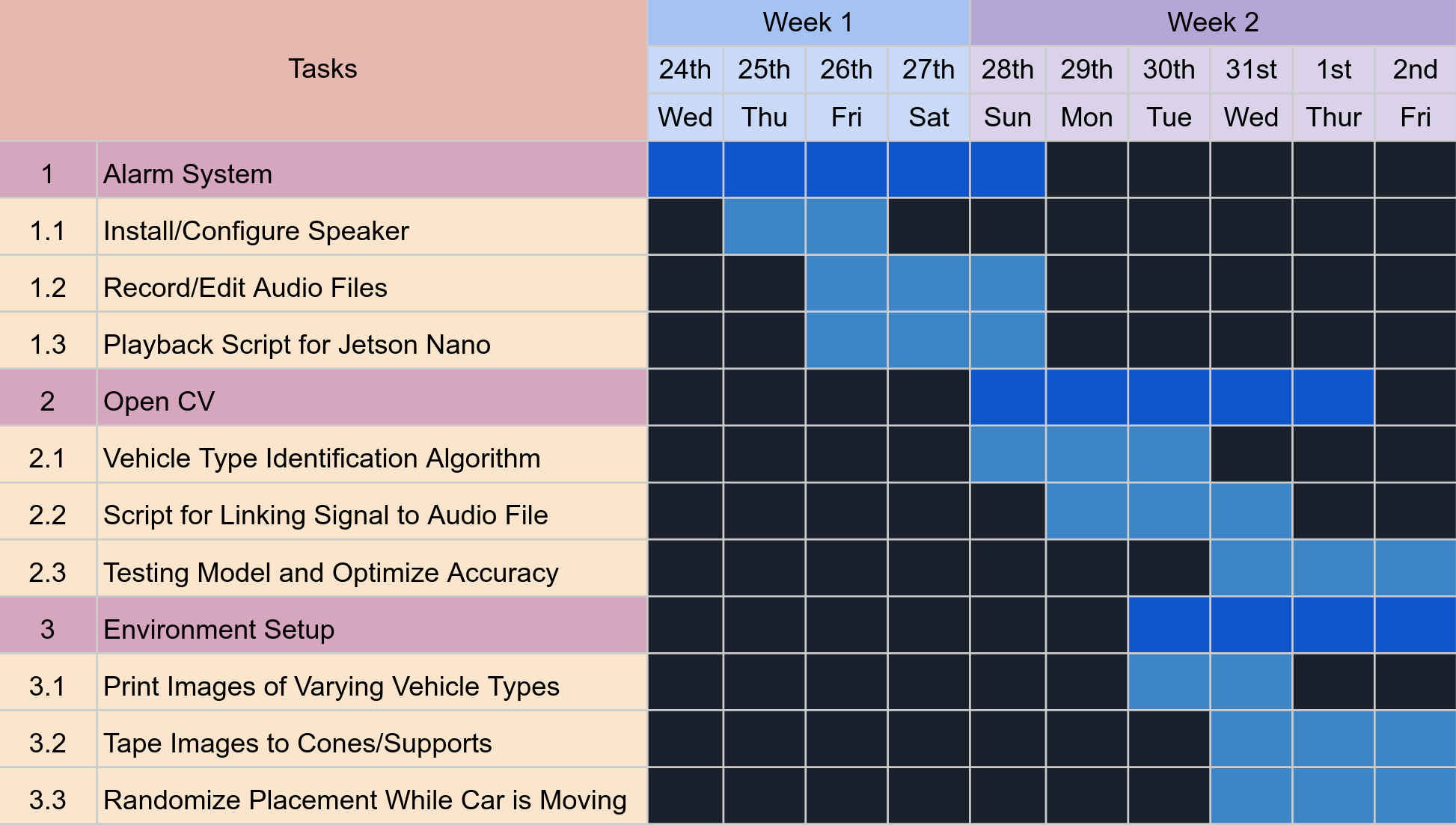
Gantt Chart
Hardware
CAD Designs
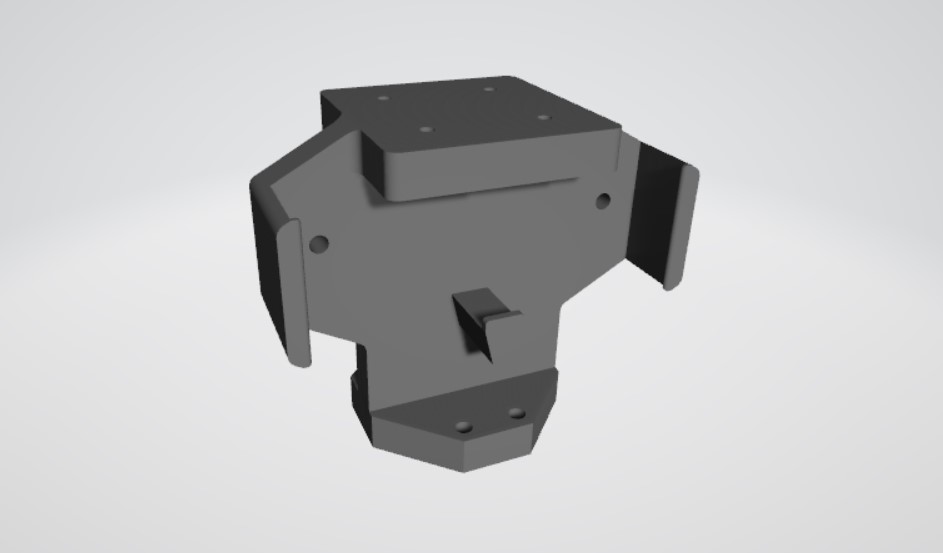
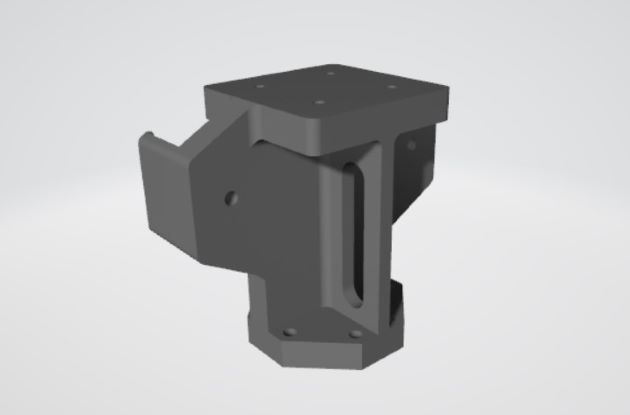
Camera Mount
This design is meant to hold a camera between the arms and LiDAR on top.
Bast Plate
Jetson Nano Case
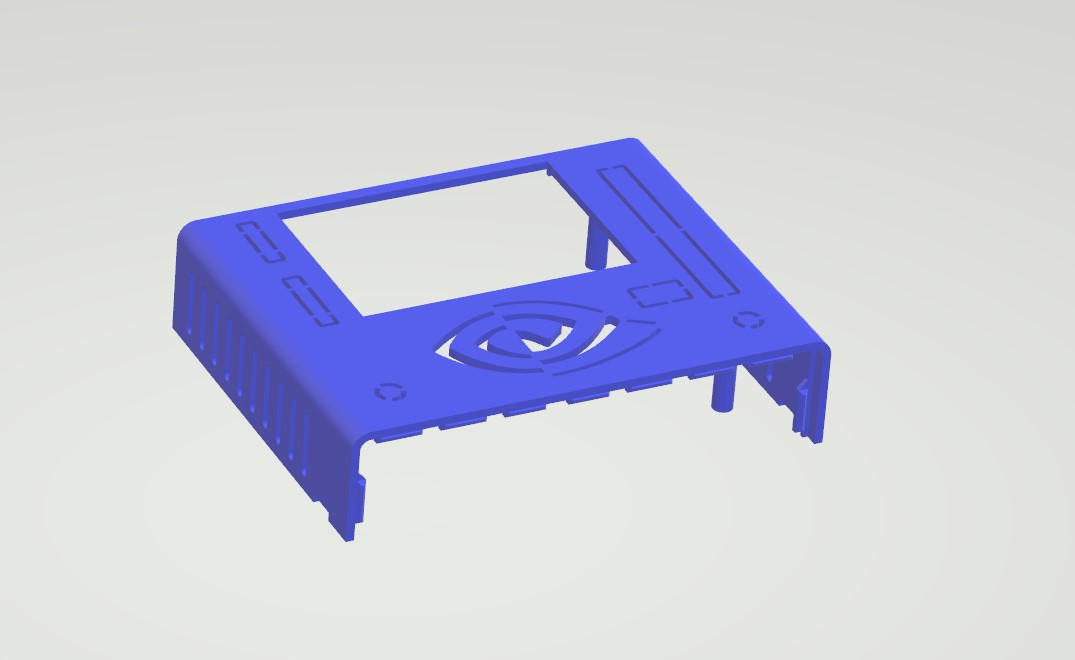
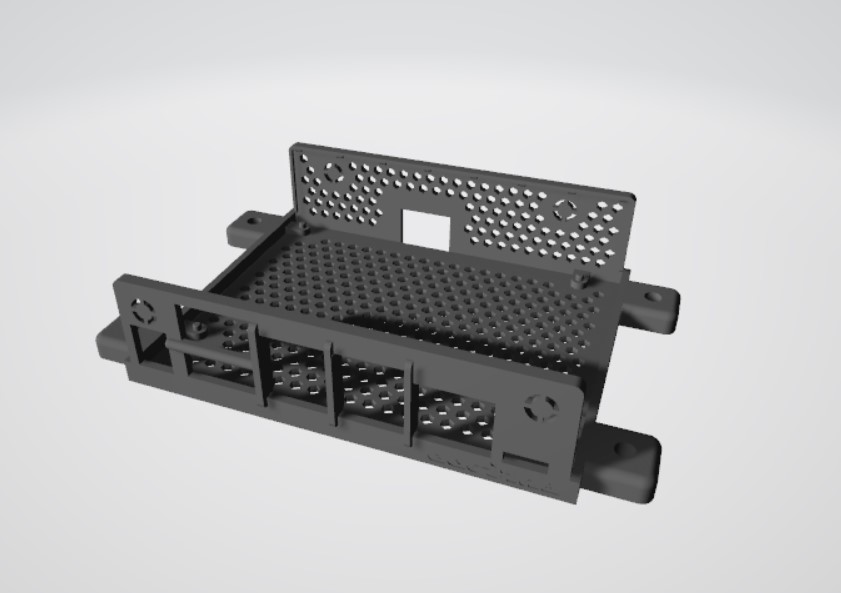
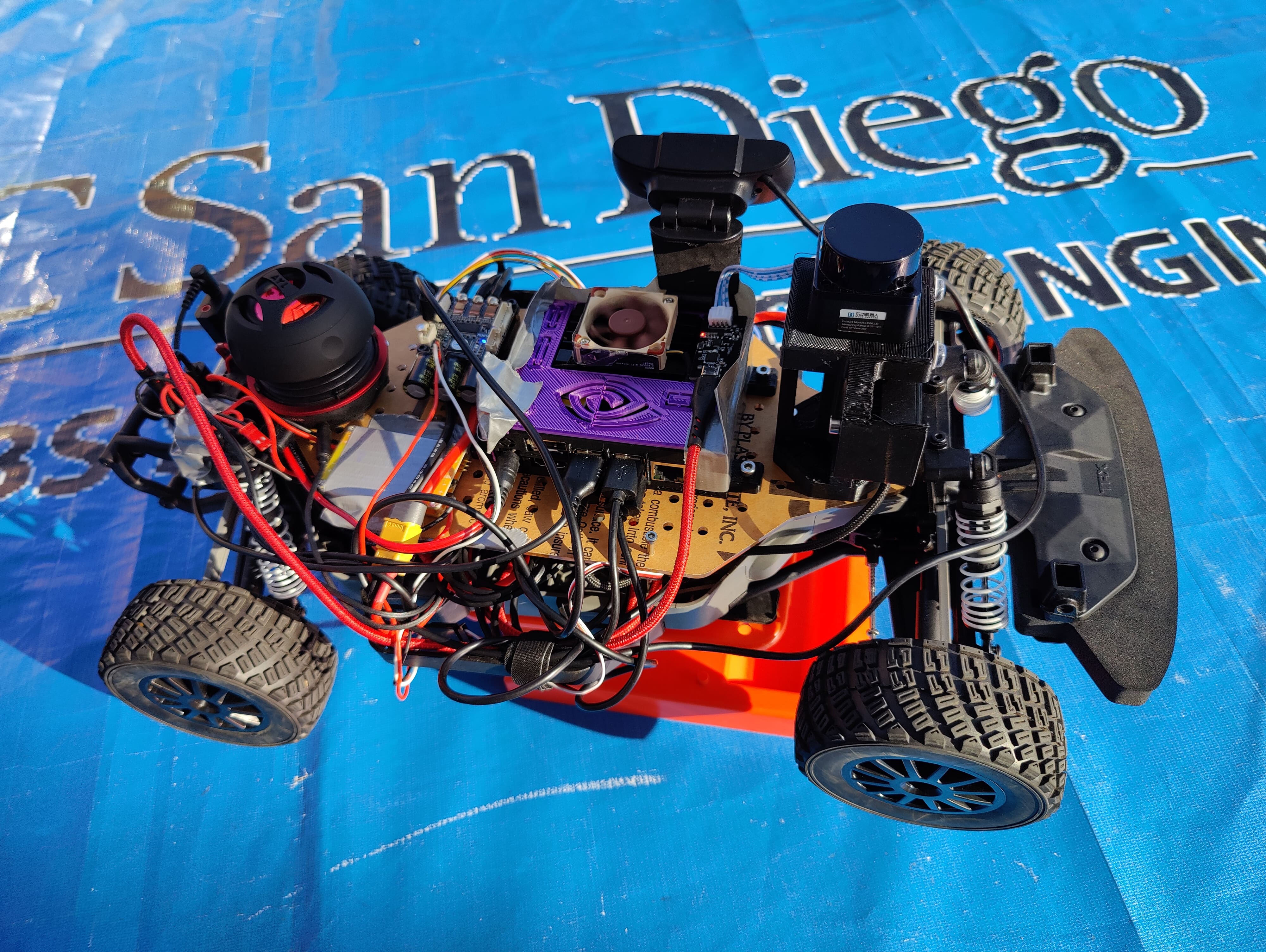
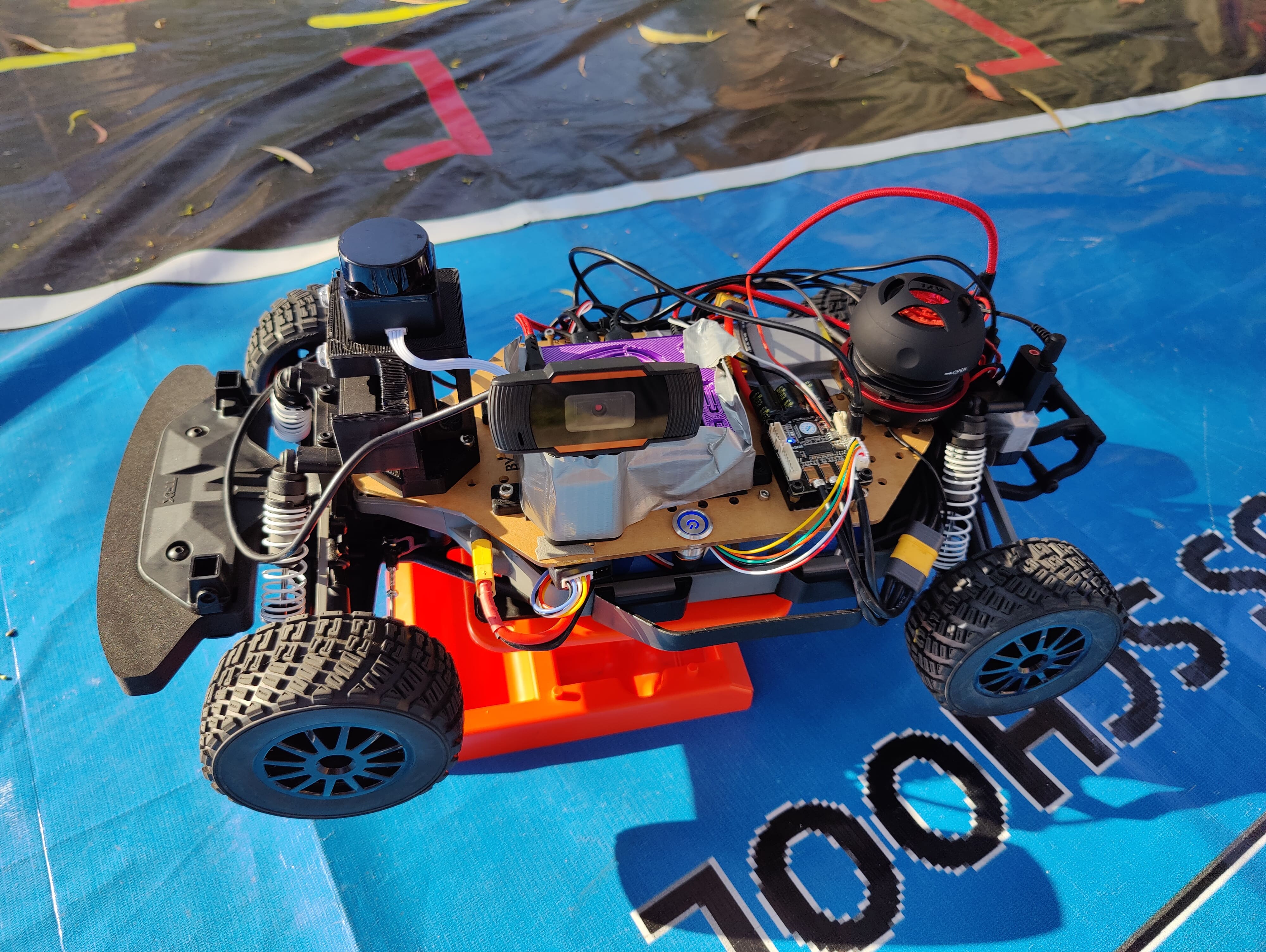
Completed Build
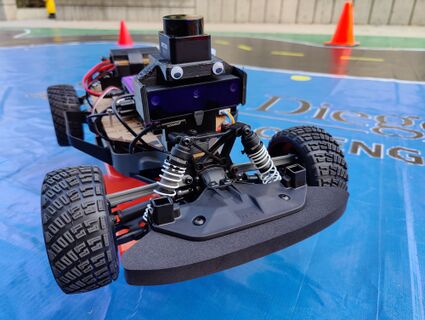
Main Camera
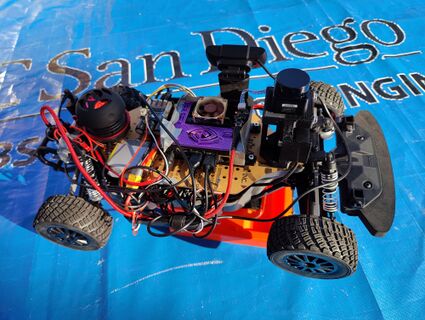
Right Side
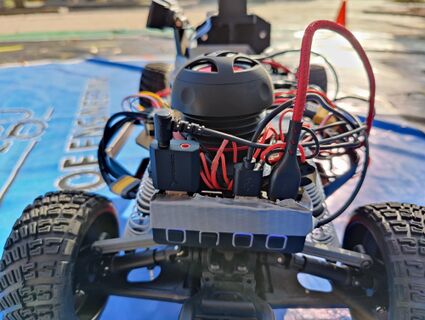
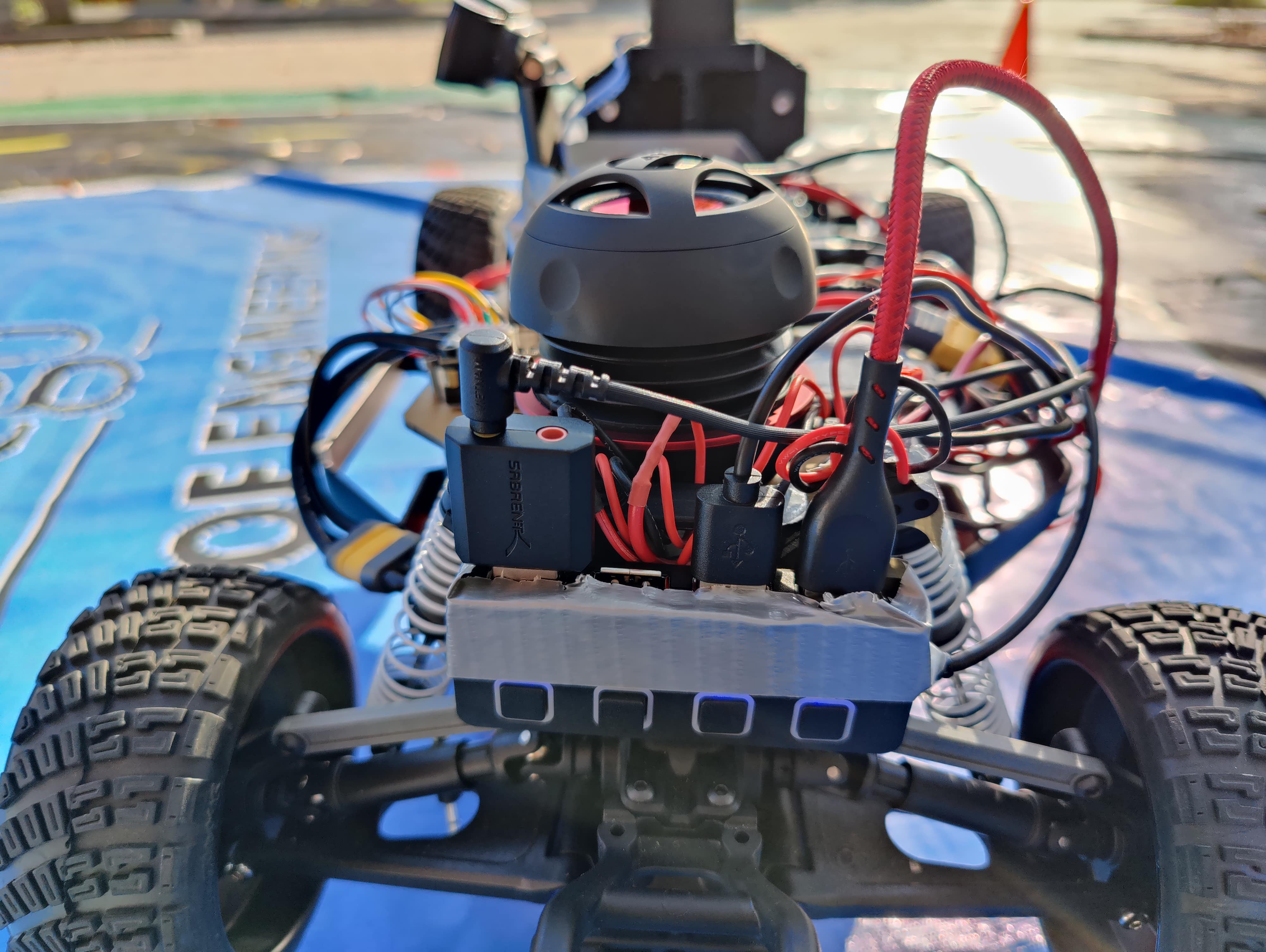
Rear View
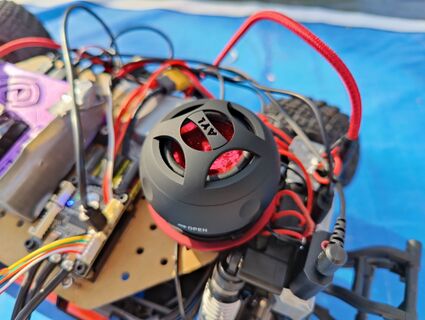
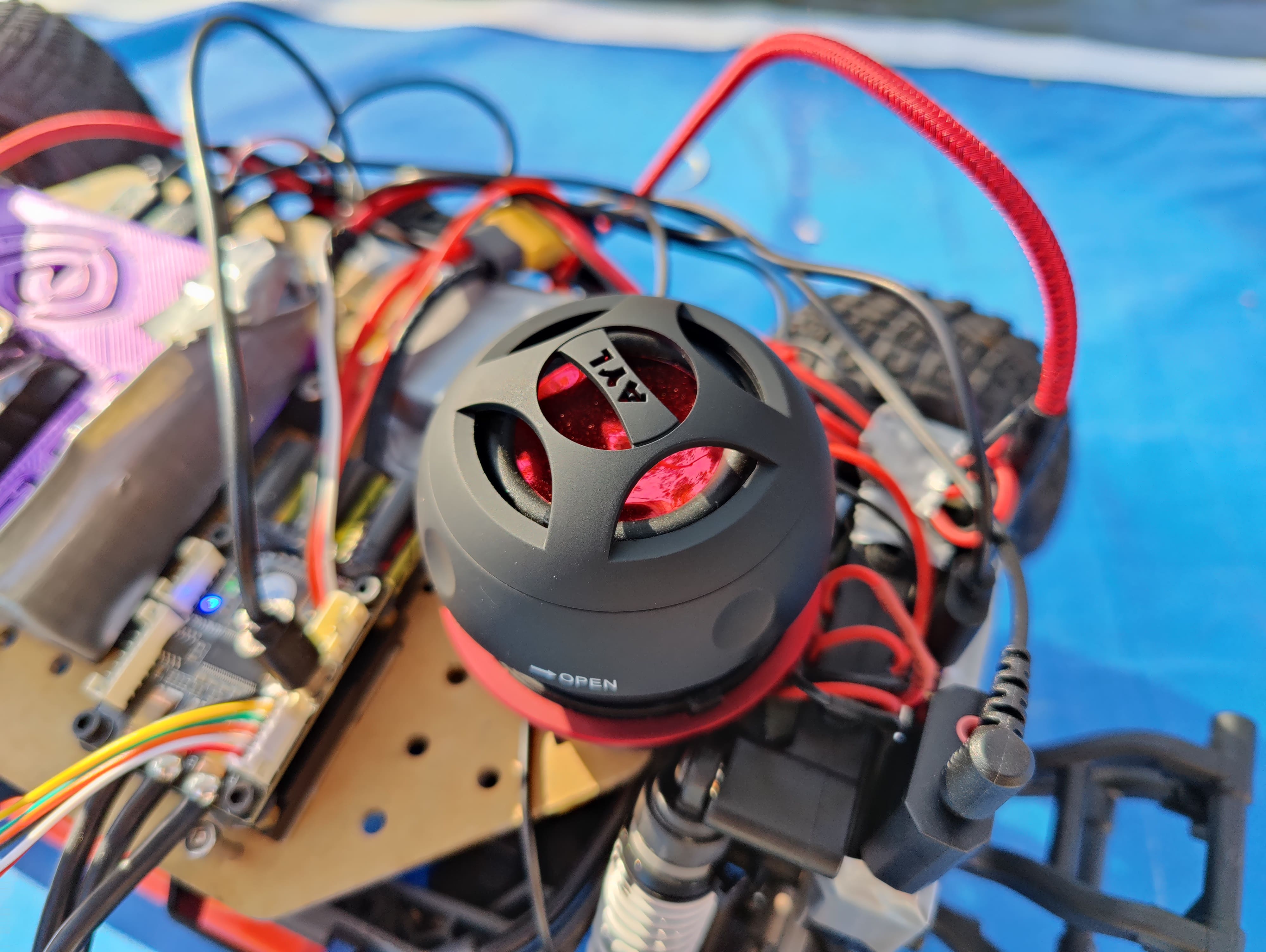
Speaker
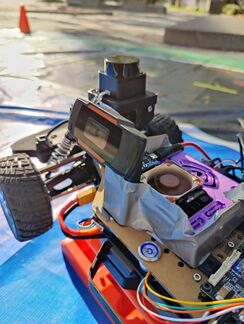
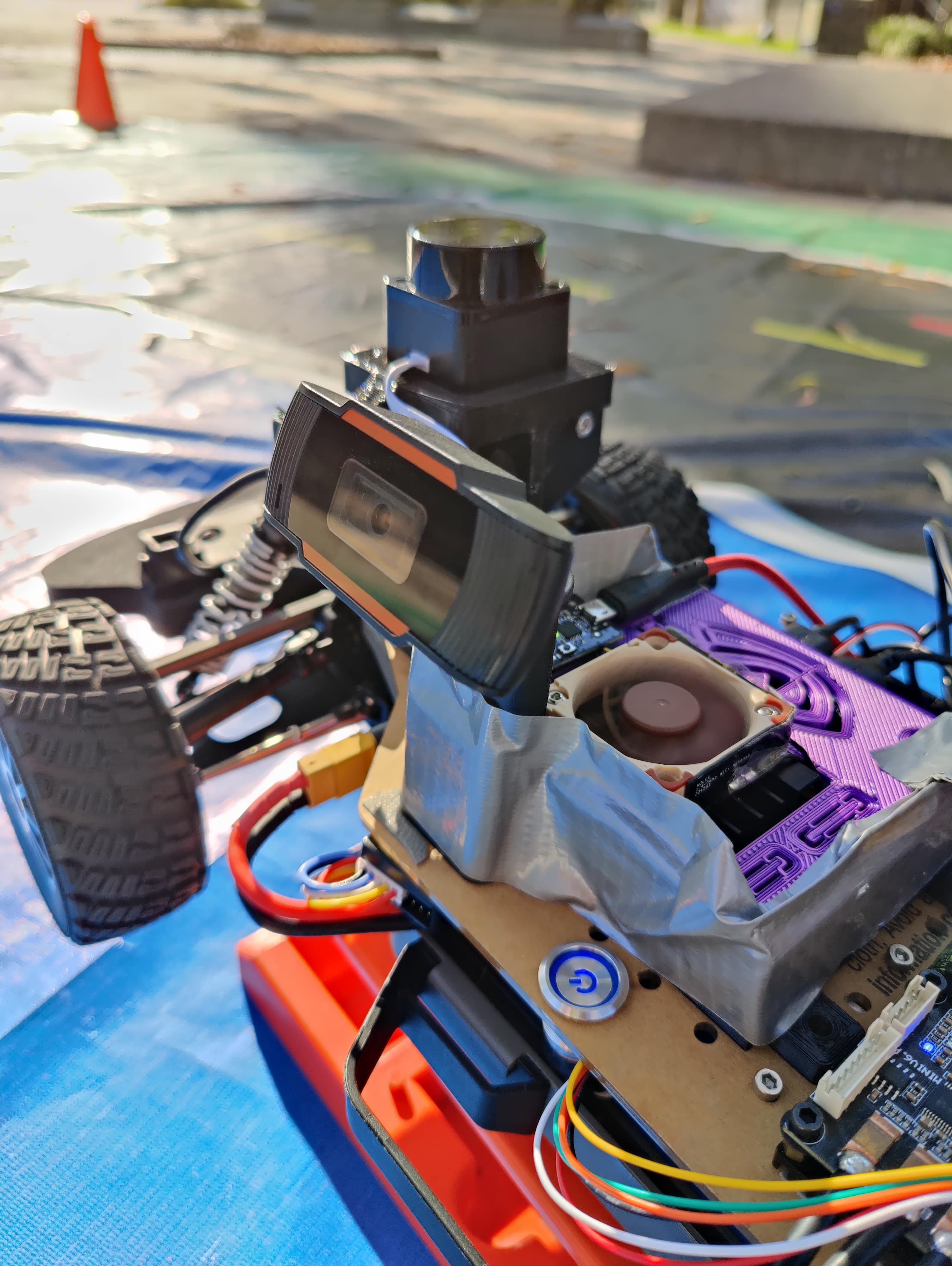
Secondary Camera
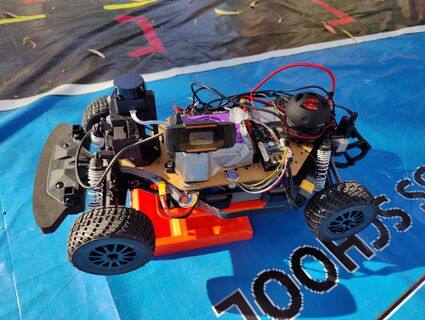
Left Side
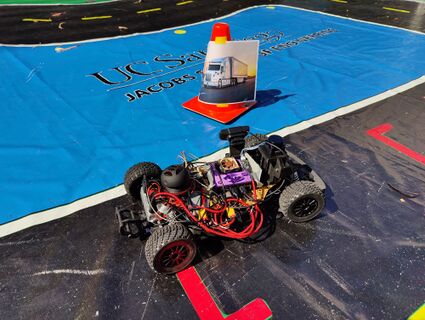
Image Pass-by
Schematic
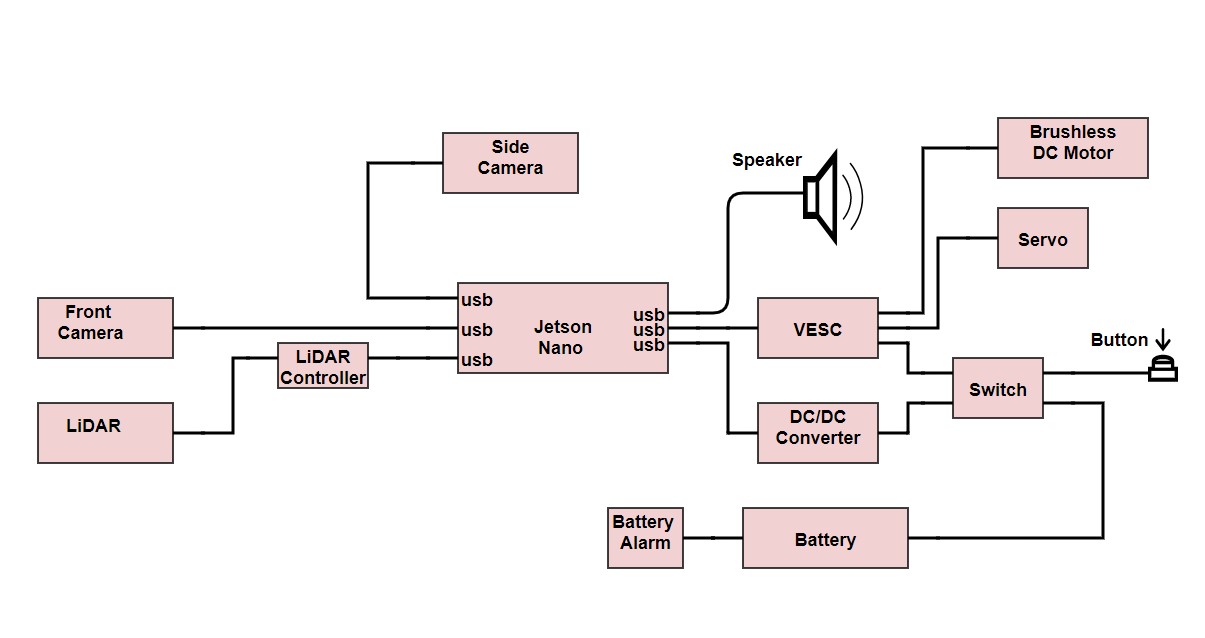
List of Components
- Traxxas Chassis
- NVIDIA Jetson Nano
- A single-board computer (SBC) that delivers the power of AI to run multiple applications like image classification, object detection, segmentation, and speech process. (https://developer.nvidia.com/embedded/jetson-nano-developer-kit)
- OAK-D Stereo Camera
- A camera is installed at the front of our robot to detect lanes and drive autonomously.
- USB Webcam
- A camera is installed on the side of our robot to detect the images.
- Speaker w/ AUX input
- USB Audio Adapter
- USB Hub
- LD06 LiDAR
- LiDAR - "Light Detection and Ranging" - is used for 3D laser scanning to detect the surface of the objects within a range, and measure the time for the reflected light to come back to the receiver.
- LiDAR Controller
- Received data from LiDAR, and send it to Jetson Nano.
- VESC (Vedder's Electronic Speed Controller)
- Open source speed controller that basically tells the motor how hard to push and how strong to break. (https://spintend.com/blogs/news/whats-vesc-how-to-use-it-whats-difference-between-vesc-and-normal-esc#:~:text=It%20tells%20your%20motor%20how,that%20the%20motor%20operates%20safely.)
- UBEC (DC/DC converter)
- UBEC stands for "Universal Battery Eliminator Circuit", a DC/DC converter, that converts high voltage to two lower output voltage channels. The detailed features can be found here (https://www.flyingtech.co.uk/electronics/matek-ubec-duo-dual-outputs-4a-5v-512v-aux-control%E2%80%8B)
- 3-Cell LIPO Battery
- Provides electrical power
- Anti-Spark Switch
- Servo Motor
- Electromechanical device that regulates the speed by producing forces or torques depending on the input current and voltages.
- XeRun 3660 G2 Brushless DC Motor
- Uses DC electric power supply to convert electrical energy to mechanical energy.
- Power Switch
- Battery Voltage Checker
- For alarm notice when the battery is low.
- DC barrel to XT30 Connector
- XT60 Y-splitter
- Logitech F710 Wireless Gamepad
Software
Our autonomous vehicle utilizes the YOLO algorithm (You Only Look Once: real-time object detection that classifies objects in a single frame). This process divides images into an NxN grid where each cell is processed by the model. Each cell is then assigned a probability of belonging to a certain class. Our YOLO algorithm is trained on the COCO dataset which can classify (4) different types of road-vehicles: {car, motorbike, bus, truck}. A Deep Neural Network (DNN) is loaded using a model trained on 320x320 image objects from the COCO dataset, along with the pre-trained weights. Once an image is read (which will come from a video frame), the postProcess() method will detect objects based on the network output. Our project used followed the following tutorial: https://techvidvan.com/tutorials/opencv-vehicle-detection-classification-counting/
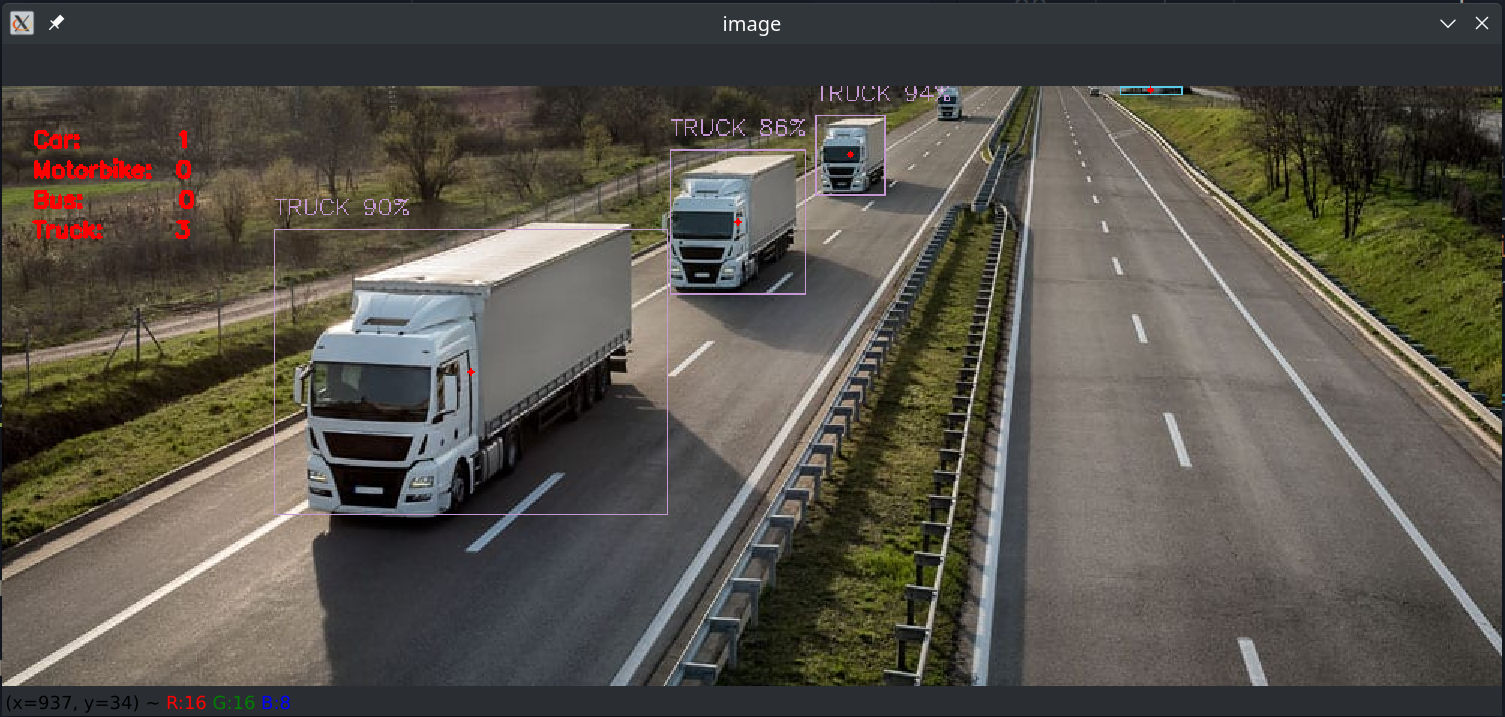
Code and all file resources can be found within our project's GitHub repository:
https://github.com/salazaru/truck-detector
Flow Chart
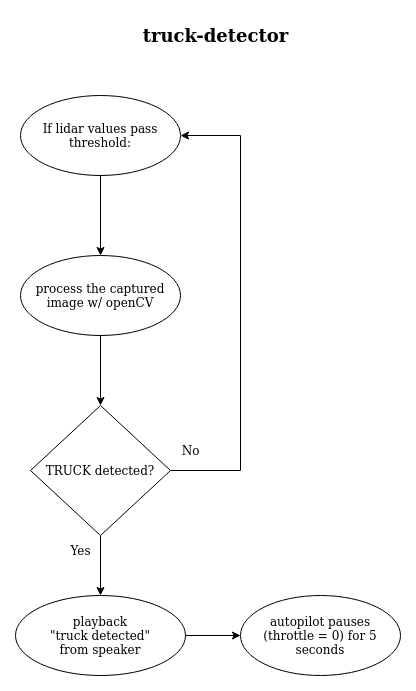
Final Presentation
https://docs.google.com/presentation/d/1ehrGzOa4HfhYvcqg_oPyq_8eAe6QWgoJScMVKWHZKAI/edit#slide=id.p
Plans for Version 2.0
Acknowledgements
Special THANKS to all those who made this project possible: